
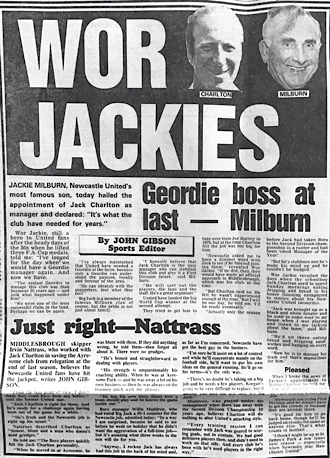
Jackie Charlton was Newcastle manager for little more than a year. He had previously had success as manager of Middlesbrough and Sheffield Wednesday and would go on to achieve near sainthood as manager of the Ireland team.
He appeared to be ideally suited for the Newcastle job; he was a local and had the necessary strength of character to deal with the peculiar pressures of sitting in the St. James' hot seat. So what went wrong?
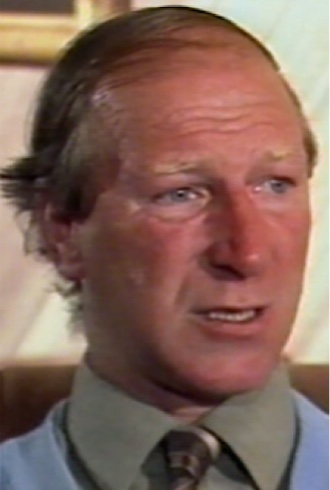
In 1974/75 Jackie Charlton - in his first season of management - steered Middlesbrough to the First Division title and scooped the manager of the Year award. The following season he resigned after taking Middlesbrough to 6th in the top division.
He returned in October 1977 as manager of Sheffield Wednesday who were languishing in the bottom half of Third Division and took them back to the Second in 1979/80. He left the Hillsborough side at the end of the 1982/83 season whereupon he spent a few months out of the game before returning to Middlesbrough on a temporary basis at the end of the 1983/84 season.
Despite his success Charlton's teams were often criticised for their negative tactics and he also had a reputation for being reluctant to spend money, something that had an obvious attraction to the Newcastle board.
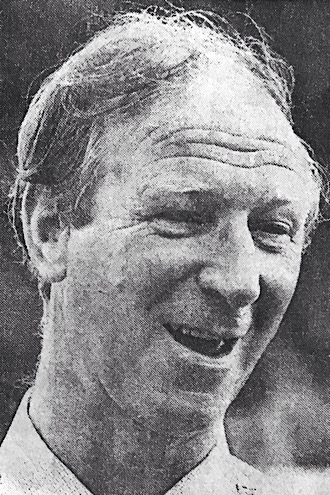
After guiding the Keegan inspired Newcastle back to the First Division Arthur Cox dramatically resigned over the length of contract on offer and the money available to spend.
United had only finished third in 1983/84 and although the attack of Beardsley, Waddle and Keegan was first class the midfield and the defence were not up to the same standard.
The talismanic Keegan had retired and United had already lost or were about to lose a number of other players with top flight experience: David Mills, John Trewick and Terry McDermott.
Newcastle also had serious financial problems with Charlton admitting he was "shocked" to learn that the club was £700,000 in debt. Undeterred, he said that it was a situation he had been in before and pointed out that when he had left Boro and Wednesday he "left them with money".
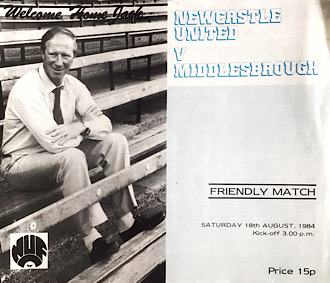
With no new faces added, the bookies had United as one of the favourites for relegation. Undoubtedly, the clear target for the year was to avoid the drop.
The confidence built up from promotion carried forward into the new season; United won their first three matches and stormed to the top of the division. No one was fooled, particularly Jack Charlton who said that "beer and skittles" football would not keep them there for long.
Charlton's original tactics were based on playing five at the back and having a very defensive midfield with Beardsley and Waddle almost having to fend for themselves upfront.
United were soon brought back down to with heavy defeats at Highbury and Old Trafford. The three-man centre-back system was dispensed with in favour of a more traditional 4-3-3 formation, eventually bolstered by two new additions to the midfield in the shape of Gary Megson and Pat Heard.
Waddle offered some quotes from Charlton in his autobiography which summed up his approach. "I don't want you to play 1-2's on goal, I want you to play 1-2's with God"......"you can't get hurt as long as the ball's up in the clouds".
By the turn of the year Newcastle had slumped to 18th in the table due to a record of won: 3, drew: 7 and lost: 9 in the 19 matches following their initial hat-trick of wins.
Charlton had said from the start that Waddle and Beardsley were too small and lightweight as a striking partnership and they needed a big man. Charlton ended up signing two: Tony Cunningham and George Reilly.
United now played the two big strikers upfront, with Waddle and Beardsley despatched to the wings. The simple ploy was for the full backs to boot the ball up to the two big men and then for Beardsley and Waddle to "gallop up and down like demented dervishes" (as Beardsley described it in his autobiography) to try and get on the end of the "second ball".
The tactics and new signings paid off to an extent, an improvement in results leading to an eventual 14th position with safety being gained despite conceding a "bloody awful" total of 78 goals (league and cup games combined).
It is probably fair to say that Jack took a fairly intransigent and occasionally confrontational approach to the players.
When he joined there were a number who had not signed their contracts and Charlton made his standpoint clear. "I don't know what contracts they have got but once I have made up my mind it will be a take-it or leave it situation....loyalty has swopped places with money".
And after meeting all the players who were unhappy with the new terms offered to them, Charlton said: "I have spoken to all of them and they have all gone out with a funny look on their faces. I don't know exactly what they can do. But I will give them their rewards if they do the business on the field".
There was an immediate fall out with Terry Mcdermott which led to him eventually leaving. Charlton wasn't prepared to offer him what he wanted and a meeting to discuss the situation was over in minutes. Jack received a lot of criticism over this from the fans and the media and used the match programme to deride Mcdermott's complaints and accuse him of disloyalty. "It was Mcdermott who chose not to play for the Newcastle fans he keeps telling everybody he loves so much"
Charlton was never afraid to publicly criticise his players and Kevin Carr bore the brunt on more than one occasion, though Jack later admitted to feeling a "wee bit guilty" about it.
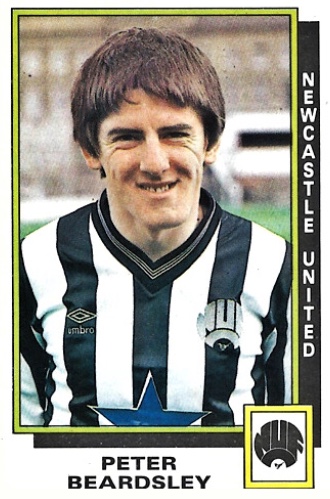
However the player he clashed with most was Peter Beardsley. Charlton later described his relationship with him as "very tindery". and he made scathing comments about Beardsley in his autobiography. "In my experience, he just doesn't listen or if he does he chooses to ignore what you say".
He would get furious with players who he thought were taking risks, if the team was winning he believed that you should "keep possession, kill time, be negative"
The most famous incident was in the home game against Luton when, with Newcastle leading 1-0 and only a few minutes to go, Beardsley lost possession after setting off on one of his mazy runs. Charlton was furious and he marched onto the field to give him "the bollocking of a lifetime". Beardsley claimed he nearly scored, Charlton responded with "you nearly cost us the f****** game".
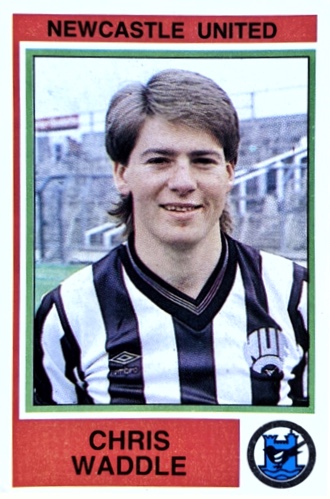
Charlton’s relationship with Chris Waddle was little better. He blamed the summer departure of Waddle on his introduction into the England squad, claiming that after that he "was going through the motions". He also claimed that the local press exacerbated the situation by continually running stories about potential suitors. Certainly Waddles's form dipped in the second half of the season.
In his own autobiography Waddle painted a different picture. He put his loss of form down to the change in tactics and team formation. He also stated that Charlton was determined to deal personally with his contract negotiations and that the first offer made was "insulting".
In his first news conference Charlton stated that the club had been guilty in the past of "spending money like it was going out of fashion". "I'm someone who spends club money as if it was my own".
He had initially been in no rush to buy players, wanting to see what he had got first "buying is a bit like marriage, you can buy in haste and repent at leisure", as he stated later.
Charlton decided that the midfield was the major area of weakness and he signed two experienced, but journeyman footballers. Sheffield Wednesday reserve Pat Heard and Gary Megson from Nottingham. Brian Clough had signed Megson from Sheffield Wednesday only six months previously, but had refused to play him stating that: "he couldn't trap a medicine ball".
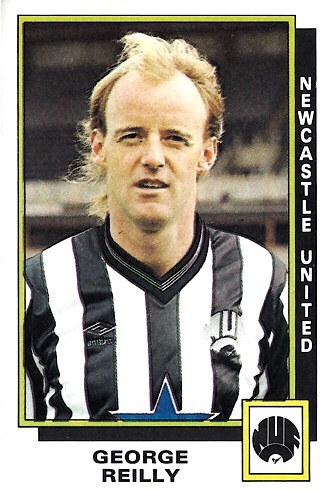
His first attempt to beef up the attack was to bring in youngster Ian Baird on loan from Southampton (5 games and 1 goal). He then tried unsuccessfully to sign George Reilly from Watford, but when his approach was rebuffed he went for Tony Cunningham from Man City instead. However, within weeks the Reilly deal was on again.
Neither Cunningham nor Reilly were regular goalscorers and a return of 1 goal in 13 games for Cunningham and 3 in 14 for Reilly were not impressive. Indeed in the 12 games they played in the same team, only 11 goals were scored.
None of the four permanent signings made by Charlton had any lasting impact. Heard was dispatched to Middlesbrough for £10,000 in September of the next season following a mere 36 appearances and 2 goals. Megson (Sheffield Wednesday £65,000 following 24(4) appearances and 2 goals) and Reilly (WBA: £150,000 33 appearances, 10 goals) followed him out the door 3 months later. Cunningham survived until August 1987 when he joined Blackpool (£25,000, 40(11) appearances, 6 goals)
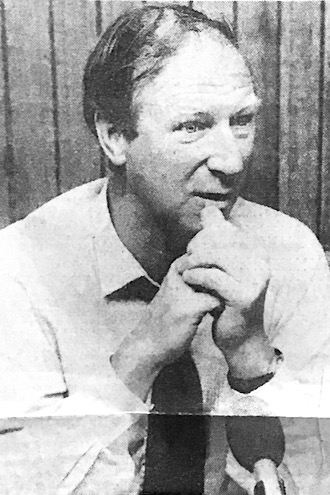
Charlton had first been approached for the United job following the departure of Joe Harvey in 1975. He had just won the Division 2 Championship with Middlesbrough and despite United's use of cousin Jackie Milburn to try and convince him, he declined.
In his first programme notes Charlton stated how he "had no hesitation at all in accepting Newcastle's offer ... there was absolutely no chance of me turning down Newcastle United". This does not quite tally with what he stated in his autobiography about Milburn having to use "family" pressure to get him to even consider it.
Willie Maddren, who knew Charlton well, expressed surprise when he took the job stating that Charlton had told him weeks earlier that he "did not want the aggravation of a full-time job".
He only agreed to take the job for one year initially and, as he had always had done previously, he did not have a contract. Charlton also made it clear that he would be "out the door" as soon as he found out he was not wanted.
Charlton's commitment was often questioned and he was clearly riled by the constant assertions that he spent too much time fishing and not enough time at the club. Charlton strenuously denied these allegations, but there were too many anecdotes which suggest otherwise.
During pre-season Charlton was away for a week on a “pre-arranged” holiday.
In September he was mocked with "Gone Fishing" headlines in the press after it was revealed he had gone on a pre-arranged fishing trip to Scotland prior to the Arsenal game which had led to him missing a training session on the Thursday.
In his autobiography, Waddle stated that the "manager always seemed to have many prior commitments which meant that day-to-day control was with (coach) McFaul". Waddle also related the story of when one day a car drove up while Charlton was taking training and a man got out and told him that there was "trout in the Tweed". Without a moments hesitation Big Jack was off.
And Neil Macdonald revealed that Charlton did not travel down with the team for the first match at Leicester and did not turn up until the pre-match meal.
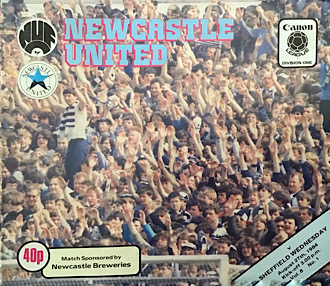
Milburn was delighted because he (as well as many other fans) felt that only a Geordie could truly identify with the supporters and understand their passion and loyalty of the area.
However in his initial news conference Charlton put a different slant on his appreciation of the Geordie passion for the game. "I am probably the first manager to understand the Geordie temperament - and I criticise it - they start demanding changes after two bad results".
Many fans were concerned that Charlton would bring an end to the free flowing football of the promotion season. Charlton made it clear from the start that "I will do what is necessary and no part of the game will be neglected".
The fears were not misplaced. As Beardsley stated in his autobiography: "I certainly didn't enjoy the way we played, neither did Waddle and I am quite certain the fans didn't like it much either". But, there was some level of understanding that pragmatism was necessary.
The same could not be said of the sale of Waddle. Once the rumours started the player himself got a lot of stick, but there is no doubt that many believed that the club had not tried hard enough to get him to stay and that Charlton was complicit in his departure.
The eventual departure of Waddle (for £590,000) during the summer angered and upset the fan base and, to add to the growing discontent, the only arrival had been Manchester United reserve Alan Davies for a measly £50,000.
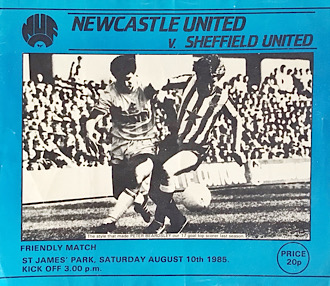
Just before the new season Charlton opened up negotiations with Ipswich midfielder Eric Gates, but Charlton thought the terms he was requesting were "over the top". Meanwhile Lawrie McMenemy stepped in and signed him for Sunderland on the day of the final pre-season friendly against Sheffield United, six days before Newcastle’s season started
The friendly attracted a meagre 4,952 crowd who witnessed a poor performance in a pretty dire 1-1 draw. "Charlton must go", "We hate Charlton" and "Sack Jack" were some of the chants from the sparsely populated Gallowgate during the match leaving Charlton, in Seymour's words, "hurt and visibly upset".
As soon as the final whistle blew he stormed into the boardroom and informed Seymour that he was resigning. "The crowd will get exactly what they want", explained Jack. "If they want to get rid of Jack Charlton then they have done it".
Seymour stated that his resignation has not been accepted, but Charlton confirmed: "I will be in on Tuesday to collect my belongings, there is no way I'm going to change my mind."
He was and he didn’t.